 Aug 08 2026
 Aug 01 2026
 Jul 25 2026
 Jul 18 2026
 Jul 11 2026
 Jul 04 2026
 Jun 27 2026
 Jun 20 2026
 Jun 13 2026
 Jun 06 2026
 May 30 2026
 May 23 2026
 May 16 2026
 May 09 2026
 May 02 2026
 Apr 25 2026
 Apr 18 2026
 Apr 11 2026
 Apr 04 2026
 Mar 28 2026
 Mar 21 2026
 Mar 14 2026
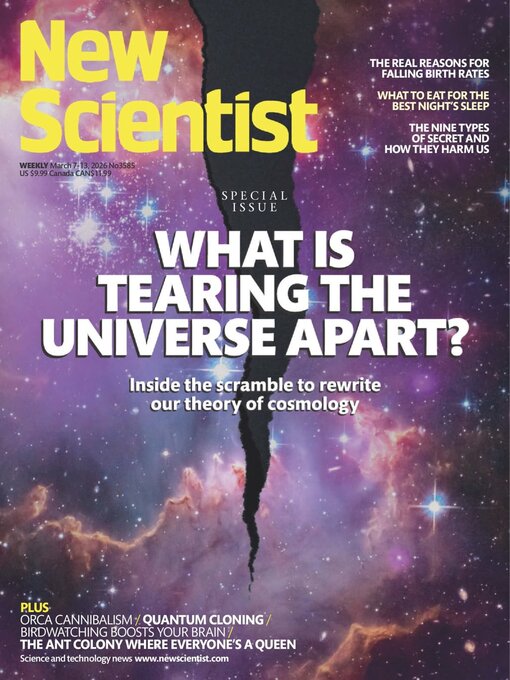
 Mar 07 2026
 Feb 28 2026
New Scientist covers the latest developments in science and technology that will impact your world. New Scientist employs and commissions the best writers in their fields from all over the world. Our editorial team provide cutting-edge news, award-winning features and reports, written in concise and clear language that puts discoveries and advances in the context of everyday life today and in the future.
A cosmic vibe shift • We should embrace the possibility of a complete cosmological rethink
New Scientist
Fresh insight into early human mating • Genetic evidence hints that Neanderthal and human interbreeding was strongly sex-biased, but the reason why is a mystery, reports Michael Marshall
We all harbour 9 secrets and they are eating us up inside
Tiny predatory dinosaur weighed less than a chicken
What to eat for a good night’s sleep • We’re learning more about how your daily diet can affect sleep quality
SpaceX plans may avoid environmental impact checks
Is geothermal energy on the cusp of a worldwide renaissance? • A wave of projects are aiming to meet growing electricity demand, some of them enabled by technology from oil and gas fracking, finds Alec Luhn
Stem cell treatment fights frailty • Improving mobility in older people typically requires lifestyle changes, but we may now have found a way to target the underlying mechanisms of ageing, discovers David Cox
World-first trial uses stem cells for spina bifida
Inside the company selling quantum entanglement • The road to a quantum internet is being paved beneath New York. Karmela Padavic-Callaghan visited the firm behind it to learn more
Banning children from social media will erode adults’ privacy • Legislation working its way through the UK parliament could put adults’ data at risk and may not make children safer, finds Matthew Sparkes
AIs can’t stop recommending nuclear strikes
Cannibalism could explain the social dynamics of orcas
Birdwatching may reshape the brain • Learning how to spot different bird species could help build a buffer against ageing
Landmark vitiligo treatment now available in England
Spreading crushed rock on farms could have a big effect on emissions
Ocean carbon removal trial is a success
Is this how Saturn’s rings were formed?
Rapamycin can add years to your life, or none at all
Quantum cloning made possible • We may have finally found a way to copy the information held in quantum computers
The ant species in which everyone is a queen
We must close the ‘shocking’ knowledge gap • This International Women’s Day, we should prioritise groundbreaking research into women’s health, such as strengthening the reproductive system’s natural defences, says Anita Zaidi
The neuroscience column • Why brains tune things out and how to overcome it We often stop noticing things we have become used to. Helen Thomson shares the evidence-backed ways to learn how to notice again
The surprising vaccine side effects that boost long-term health • People often focus on the bad side effects of vaccines, but they can have some great ones too, says Michael Le Page
Deep dive • Underwater Photographer of the Year
Defence against the dark arts • If up to 20 per cent of us really do score highly on traits related to psychopathy, we are going to need all the help offered by a compelling new book, says Sally Adee
Three other great books on bad behaviour
New Scientist recommends
The science fiction column • Entirely uplifting The latest book in Adrian Tchaikovsky’s Children of Time series features a human-size mantis shrimp. It’s wild – and, of course, brilliant, says Emily H. Wilson
Your letters
OUR MISUNDERSTOOD...