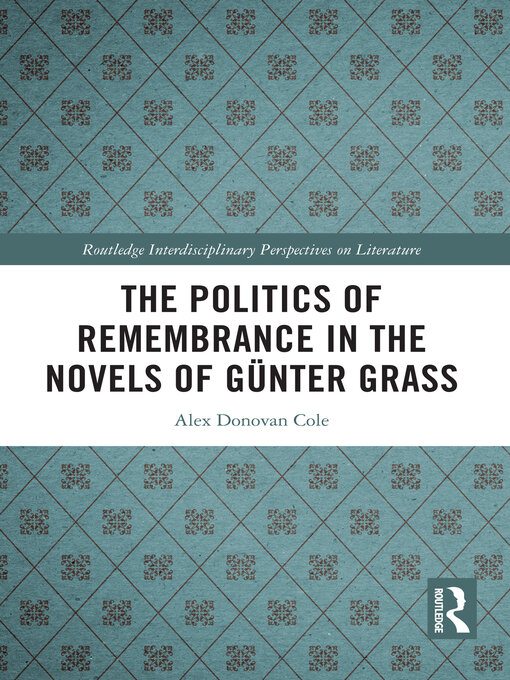
This manuscript argues for the importance of Günter Grass as a political thinker in addition to his status as a novelist and public intellectual, capable of forming ethical responses to contemporary issues like neoliberalism and place of the petit bourgeoisie in social life. I define Grass's trajectory as a thinker through his novels and speeches. Primarily, I draw attention to the role memory plays in Grass's thought: that his work represented an intellectual and aesthetic response to the role Nazism continued to play in West German politics in the post war era. To Grass, Nazism represented a resurgent threat unaddressed following the end of World War II. Later, Grass amended his concept of memory politics to address neoliberal capitalism, reiterating his radicalism and affirming the need for German society to resist the rise of extreme ideologies.
- Available now
- New eBook additions
- New teen additions
- Most popular
- Try something different
- Deaf Culture and ASL
- Adult New Readers
- See all ebooks collections
- Hot and Trending Listens
- New audiobook additions
- New kids additions
- New teen additions
- Most popular
- Try something different
- Available now
- Quick listens
- Read by a Celeb
- Audiobooks for the Whole Family
- Best for Short Drives
- 2023 Audies Award Nominees
- See all audiobooks collections
- Home & Garden
- Most popular
- Crafts
- Lifestyle
- Health & Fitness
- Cooking & Food
- Fashion
- Try something different
- Celebrity
- Tech & Gaming
- Cars & Motorcycles
- Family & Parenting
- Sports
- See all magazines collections